
Guest article written by Nicky Holbrook, Sports Massage & Myofascial Release Therapist based in Lindfield.
If you’ve ever finished a workout feeling fine… and then woken up the next day barely able to sit down or lift your arms, you’ve experienced DOMS.
DOMS stands for Delayed Onset Muscle Soreness.
It’s the ache or stiffness you feel 24-48 hours after doing something new, increasing intensity, or repeating a movement your body isn’t used to.
It’s common.
It’s normal.
And it doesn’t mean you’ve done anything wrong.
If you’re new to strength training, learning how to train safely can help reduce excessive soreness and improve recovery.
Find out more about that here:
How to Start Strength Training Age 40+
What Causes DOMS?
When you introduce a new exercise or increase your training load, tiny microscopic changes occur in your muscle fibres and surrounding connective tissue (fascia).
Your body responds by:
- Triggering inflammation (a normal healing response)
- Increasing blood flow to the area
- Starting the repair process
This repair process is what makes you stronger over time.
The reason soreness often peaks 1-2 days later is because that healing response ramps up after the workout – not during it.

Does DOMS Mean Muscle Damage?
No – not in a harmful way.
DOMS is part of the adaptation process. It’s your body responding to a new challenge.
However, it’s important to distinguish between:
- Normal soreness (tight, achy, slightly stiff)
- Injury pain (sharp, sudden, worsening, limiting movement significantly)
If you can’t move the muscle at all, or there’s sharp pain rather than general soreness, that’s different and should be assessed.
Why Is It Worse After Certain Exercises?
Soreness tends to be more noticeable after eccentric movements – when a muscle is lengthening under load.
For example:
- Lowering into a squat
- Walking or running downhill
- Lowering a dumbbell in a bicep curl
- The calves during running push-off
These lengthening phases place more tension through the muscle and surrounding fascia, which can increase post-exercise soreness.
Is DOMS Necessary for Progress?
No.
Soreness is common when:
- You’re new to training
- You’ve increased weights or exercise length
- You’ve returned after a break
- You’ve changed exercises
But progress doesn’t require being sore every time.
Over time, as your body adapts, DOMS usually reduces – even though you’re still getting stronger.
How Long Does DOMS Last?
For most people:
- It starts 12-24 hours after exercise
- Peaks around 24-48 hours
- Gradually eases over a few days
During this time, you might notice reduced strength or range of movement. That’s normal.
Gentle movement, hydration, sleep and good nutrition all support recovery.
Getting enough protein is particularly important when it comes to recovery and muscle repair. Find out more about how to do that here:
Can Sports Massage Help?
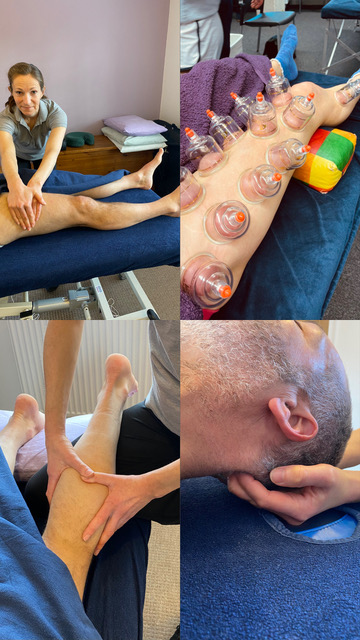
There is evidence that massage therapy can reduce the severity of DOMS and improve recovery time.
A 2017 study found that massage significantly reduced muscle soreness and markers of inflammation following exercise, and is most effective within 48 hours post exercise.
Massage may help by:
- Reducing muscle tension
- Improving circulation
- Supporting tissue recovery
- Restoring joint mobility and flexibility
- Promoting relaxation and better sleep
Tight, restricted tissue can affect how joints move and may increase injury risk over time. Supporting recovery properly can help maintain movement quality as you continue training.
If you’re local and feel recurring tightness or soreness is limiting your training, Nicky Holbrook offers Sports Massage & Myofascial Release therapy in Lindfield, supporting active adults with recovery and injury prevention.
You can find out more here → Nicky’Sports Massage
A Quick Word of Caution
There’s a difference between productive soreness and overdoing it.
If you’re so sore you can’t walk, lift your arms, or perform basic tasks, the training load was probably too high.
Progress should feel challenging – not disabling.
Gradual increases in load are far more effective (and sustainable) than pushing to the point of strain.
The Bottom Line
Some soreness after a new or challenging session is normal.
It’s part of the body adapting and getting stronger.
But you don’t need to chase soreness to see results.
Strength is built through consistent, progressive training – supported by recovery.
When Soreness Becomes a Barrier
If you’re trying to get stronger but keep feeling unsure about how much to do, when to rest, or how to progress without overdoing it, that’s completely normal.
Having a structured plan and the right guidance can make a big difference — helping you build strength, recover well and stay consistent.
If you’d like support with strength training and sustainable weight loss, you can find out more about my online coaching for women here:
Online Weight Loss Coaching with Hayley
About the Author

Nicky Holbrook is a Sports Massage & Myofascial Release Therapist based in Lindfield. She works with runners, gym-goers and active adults to support recovery, improve movement quality and reduce injury risk.
You can learn more about her work here: