
Thanks for being here – this is a slightly different blog from my usual ones. This is the story of how I ended up with a European Championship bronze medal. I hope the lessons I learnt along the way will help you with your own goals too – whether that’s losing weight, getting fitter or building healthier habits that last.
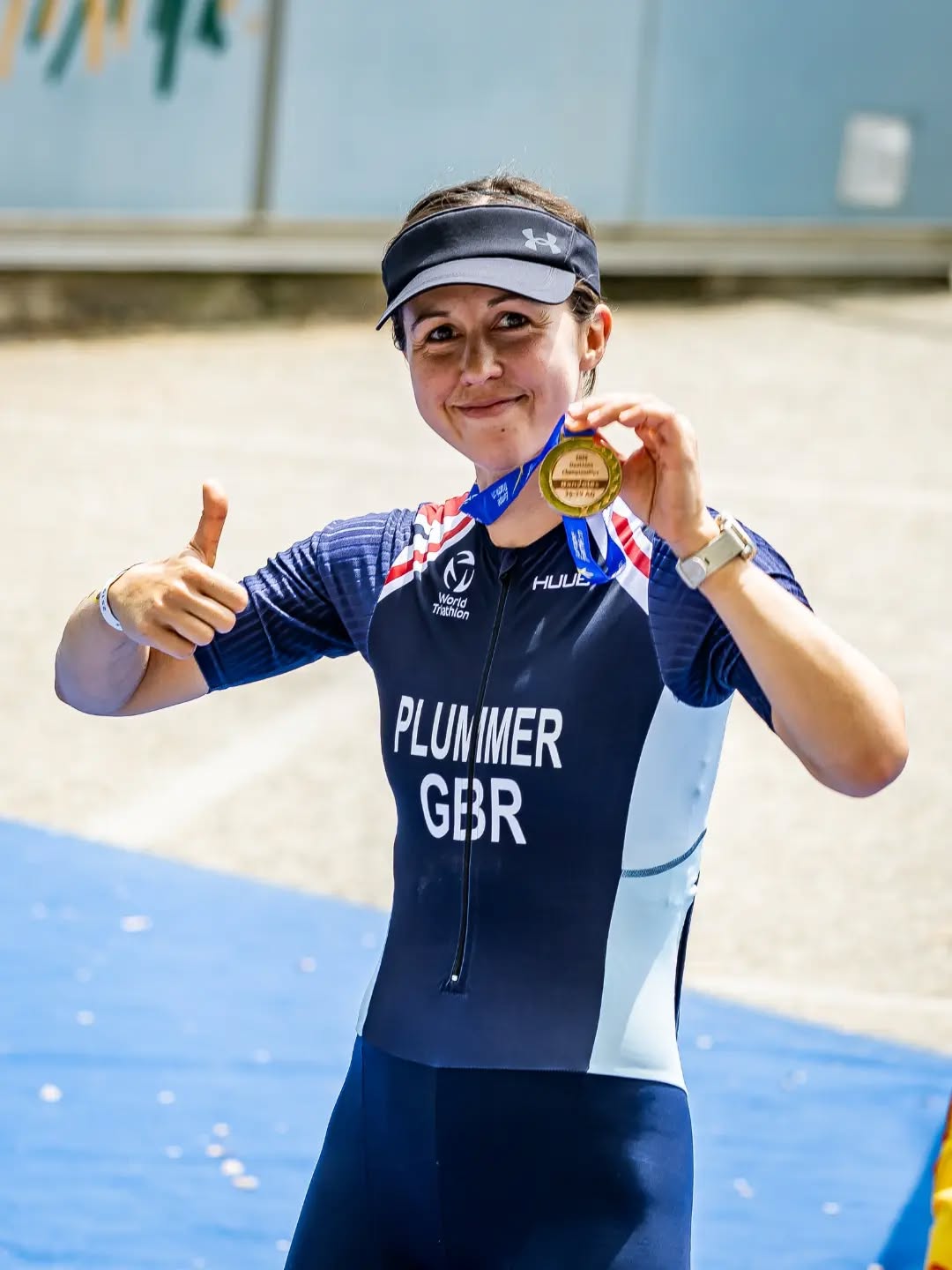
On 12th July 2026, I stood on a podium in Spain with a bronze medal around my neck, having come third in my age group in the European Duathlon Championships, racing for Great Britain.
Even now, it still feels slightly ridiculous to write that sentence. But I can happily say it was one of the best experiences of my life.
If you prefer to listen rather than read, I talk more about it in this podcast episode:
Eighteen months earlier, I could never have predicted this was where I’d end up, and how different life would have become.
It started when I’d entered a 10k running race, because I wanted to get better at running.
When I was training for the race, my partner at the time looked at my running and cycling times and asked if I’d ever thought about duathlon.
I hadn’t.
To be honest, I wasn’t even completely sure what a duathlon was (I now do the Standard length duathlon which is a 10k run, 40k bike ride, and 5k run).
He compared my times with results from the European Championships and pointed out that I perhaps wasn’t as far away as I assumed.
I like a challenge, and that planted a seed.
Looking back, that was the moment that racing for Great Britain first became a secret ambition.
I had no idea whether I could actually qualify, but it felt good to have something to aim for.
So I decided to find out what might happen if I properly trained for it.
After a bit of online research, I signed up for a structured duathlon plan with coach support, entered races to get experience, and spent the following months trying to improve.
I’ve already written about why consistency matters more than motivation and how consistently showing up helped me qualify for Team GB.
But getting from that first conversation to standing on a European Championship podium taught me a lot more than that.
You don’t need to know how far you can go before you start
At the beginning, the goal was simply to see whether I could qualify to race for Great Britain.
That already felt like a big enough challenge.
A European Championship medal wasn’t something I seriously expected.
But what mattered was that with a structured plan to follow, the gap between where I was, and where I wanted to be, no longer looked impossible.
So instead of asking whether I was good enough, when I new I currently wasn’t, I started asking a more useful question:
What would I need to do to improve?
That’s something I think applies to so many goals.
If you want to lose weight, get stronger, feel fitter or change your relationship with food, it’s very easy to judge what’s possible based on what has happened before.
If you’ve struggled to stay consistent, you can end up believing you always will.
If you’ve regained weight in the past, part of you is worried you’ll do it again.
And if you’ve previously felt uncomfortable in a gym, you may have decided that strength training isn’t for you.
But your starting point isn’t your limit.
You don’t need to know exactly what the end result will be.
You just need to know what the next useful step is.
Confidence usually comes after you start
Once I decided to give duathlon a proper go, I signed up for a training plan with coach support through MyProCoach.
Interestingly, I’ve been asked a few times why I wanted a coach when I’m a coach myself.
The simple answer is that I know how valuable good coaching can be, and I wanted to learn from someone who specialised in this area.
As a weight loss coach, my expertise is helping women lose fat, get stronger, improve their relationship with food and build healthier habits they can maintain.
Duathlon training isn’t my area of expertise.
My coach understood how to combine running, cycling, strength training and recovery, how to prepare for races, and when I needed to push or back off.
Importantly for me, having a plan, and that support, removed a lot of the constant decision-making.
Left entirely to my own devices, I would definitely have done more of the things I enjoyed and less of the things I didn’t.
Instead, most days my job was simply to look at the plan and do what was there.
In practise, that is a lot less exciting than doing random workouts or whatever feels good on the day, which is what many people get drawn into doing. And to be clear, there’s nothing wrong with that if you’re not too fussed about making progress and just want to enjoy it.
But following a structured and progressive plan is the what will give you the best chance of improving and getting rewarded for your efforts, and for me it made a big difference.
My first months of training, and first races, gave me some great learning experiences.
I made various mistakes.
Started to learn how to faff less in transition when going from running to cycling and then back to running again (still plenty of work to do on this).
I got more comfortable running straight after cycling (such a bizarre feeling the first few times – legs are like ‘WTF are you doing?!’).
My running improved. My cycling improved.
And gradually, I felt more comfortable racing.
That’s how confidence often builds.
Not by waiting until you feel ready.
But by doing something while you’re still unsure, then slowly collecting evidence that you can cope with it.
‘I managed that.’
‘That felt better than last time.’
‘I’m stronger than I was.’
That same process matters outside sport too.
You don’t need to feel completely confident before you start strength training, changing your habits or approaching weight loss differently.
Confidence often comes from seeing yourself follow through.
Progress rarely feels dramatic while it’s happening
One of the things I’ve realised looking back is how unremarkable most progress feels while you’re actually making it.
There wasn’t one training session where everything suddenly clicked, or one point where I transformed into a much better duathlete. I just gradually got a bit fitter, a bit stronger, and more experienced.
Paces that had once felt hard became more manageable. I became more confident when racing, better at judging my effort, and more sure that I could cope when things got uncomfortable.
Because the changes happened gradually, it was easier to see them when I looked back over several months than from one week to the next.
I think this is something that can make weight loss and behaviour change frustrating too.
We naturally want evidence that our efforts are paying off, and often we look mainly at the most obvious result – the number on the scales.
But progress can also be that you’re planning meals more easily, getting stronger, feeling fitter, thinking about food less, or handling situations differently from how you would have done a few months ago.
Maybe a meal out no longer turns into an entire weekend of overeating. Or missing a workout doesn’t make you feel like you’ve failed and need to start again on Monday.
Those things may not feel particularly dramatic, but they’re often the changes that make the end result much more likely to last.
Sometimes life changes while you’re working towards your goal
There was also a lot happening away from training during those eighteen months.
Something deeply upsetting happened in my personal life, and life became very different from what I’d expected. There were times when I felt anxious, distracted and emotionally drained, and inevitably that affected how I felt going into some sessions.
But training also became a really positive focus.
I could start a run or bike ride with my head completely full of thoughts and worries, and finish with none of the circumstances having changed, but feeling calmer and much more able to deal with them.
Having something positive to work towards gave me some structure and a sense of progress during a time when other parts of life felt uncertain.
And it reminded me that healthy habits have even more value when life feels hard, as long we as don’t put pressure on ourselves to do them perfectly.
Because of course, there are times when you need to adapt. You might need to train less, take some pressure off fat loss, make food simpler, or temporarily lower your expectations of what you can manage.
But that’s very different from giving everything up until life becomes easier.
For me, continuing to train didn’t make the difficult things disappear.
But it gave me something that helped me cope with them better.
And it got me through to the qualifying race in October 2025, where I managed to qualify to race for Team GB the following summer.
Preparing well wasn’t about doing more and more
Once I’d qualified for the European Championships, my focus became giving myself the best chance of having a good race in Spain.
As the race got closer, the heat was one of the biggest concerns. The event was in Banyoles, near Girona, which was regularly showing temperatures above 30°C.
So when we had some hot weather in June the UK, I deliberately did some sessions at the hottest part of the day. And when the temperature dropped again, I swapped to heat sessions indoors on the bike, wearing several layers with no fan (not fun).
I also worked on the mental side of racing. My coach recommended a book called The Brave Athlete, which I too can now also highly recommend. In the weeks before the race I listened to it on Audible several times, and some of the strategies from it ended up being incredibly useful on race day.
Alongside that were all the less interesting but equally important things: following the training plan, doing my strength work, practising transitions, fuelling properly, recovering and getting enough sleep.
One of the many things I found valuable in having a coach was having guidance on what to do when I wasn’t feeling great – either physically tired or mentally struggling.
Sometimes the right thing was a hard session, and sometimes it was an easy ride or a rest day.
And I think that’s another lesson that transfers very easily to weight loss and fitness.
When you really want a result, it’s tempting to assume that more effort must mean more progress.
More exercise, fewer calories, more rules, being stricter.
But the best plan isn’t the one that asks the most of you.
It’s the one that gives you enough of the right things to make progress, while still being realistic enough to keep doing.

By the time I got to Spain, I didn’t think I’d win a medal
When I arrived in Banyoles a few days before the race (accompanied by my brother who is an amazing photographer and took the GB-kit race photos in this blog), it all suddenly became very real.
There were Team GB athletes everywhere, as well as various other nationalities. We went to an opening ceremony and Parade of Nations, as well as a team meeting to go through all the race procedures.
I kept reminding myself to take it all in. Whatever happened in the race, I’d achieved the original goal. I was in Spain, wearing GB kit and about to compete at a European Championship. Bonkers. But also amazing and something to savour.
Before flying to Spain, I’d looked up some of the women I’d be competing against in my age group, and they all seemed to be faster than me.
In the depths of winter months earlier, I’d actually created an AI image of myself standing on the podium with a medal, as way of keeping myself motivated to train in the cold and rain.
But after seeing my competitors, a podium didn’t feel particularly realistic.
My goal from the start had been to just do everything I could to do as well as I could. I didn’t want to have any regrets or wish I had tried harder. Once I got to Spain, the goal was simply to race as well as I could, do my best, and enjoy the experience.
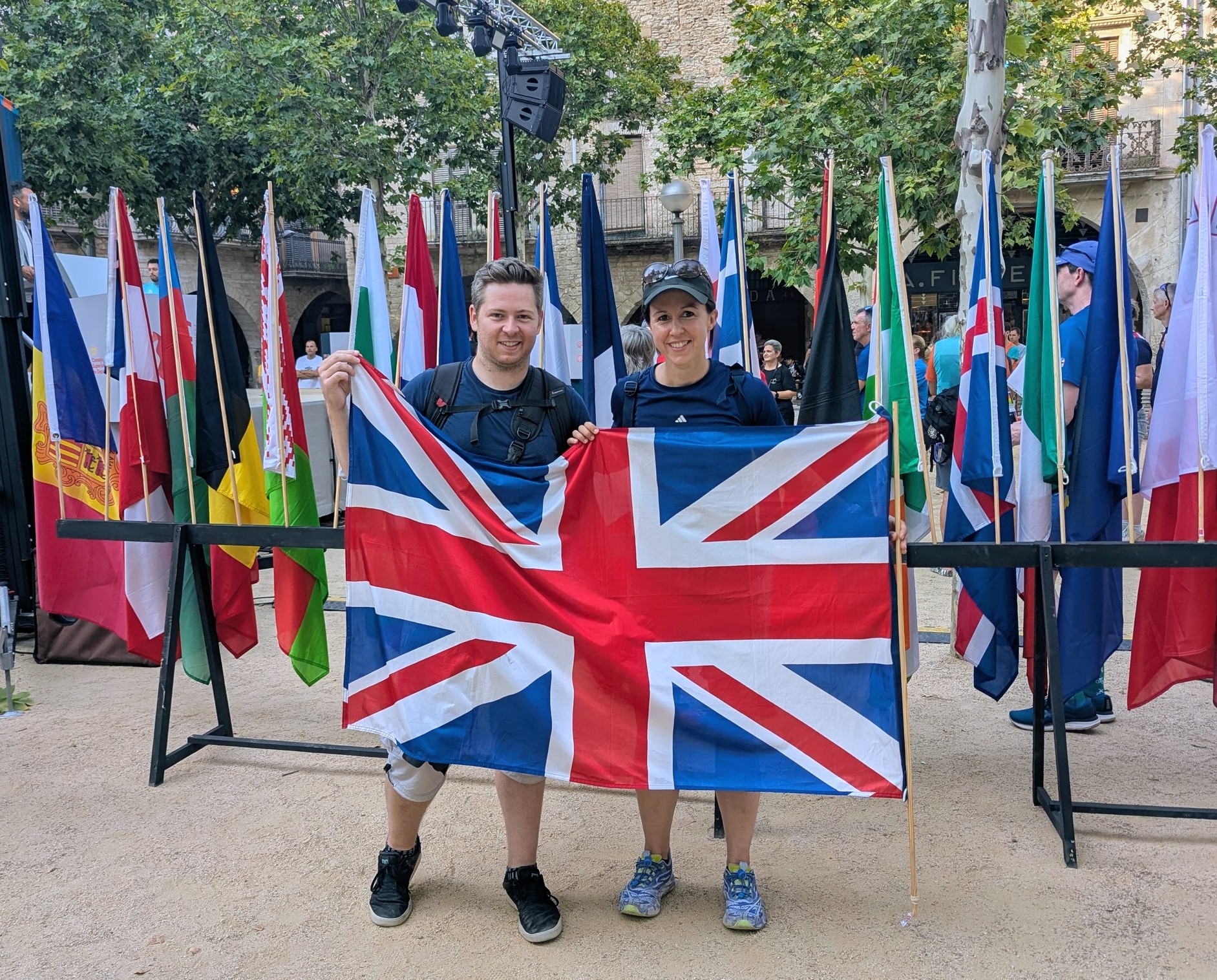
Then I had to trust the plan
At the start of the race, we got called to the start line in front of a grandstand full of family and other spectators.
There was dramatic music playing as we walked out, followed by 15 seconds of a heartbeat before the klaxon went. I remember standing there looking around and just thinking ‘wow!’. It was such a cool experience.
And after all the months of training and preparation, there was nothing left to do except race.
A lot of women went off faster than me on the first 10k run, and there was a huge temptation to keep up with them as I ended up near the back. But I knew what pace I could do, and that my strength was on the bike, and stuck to the plan.
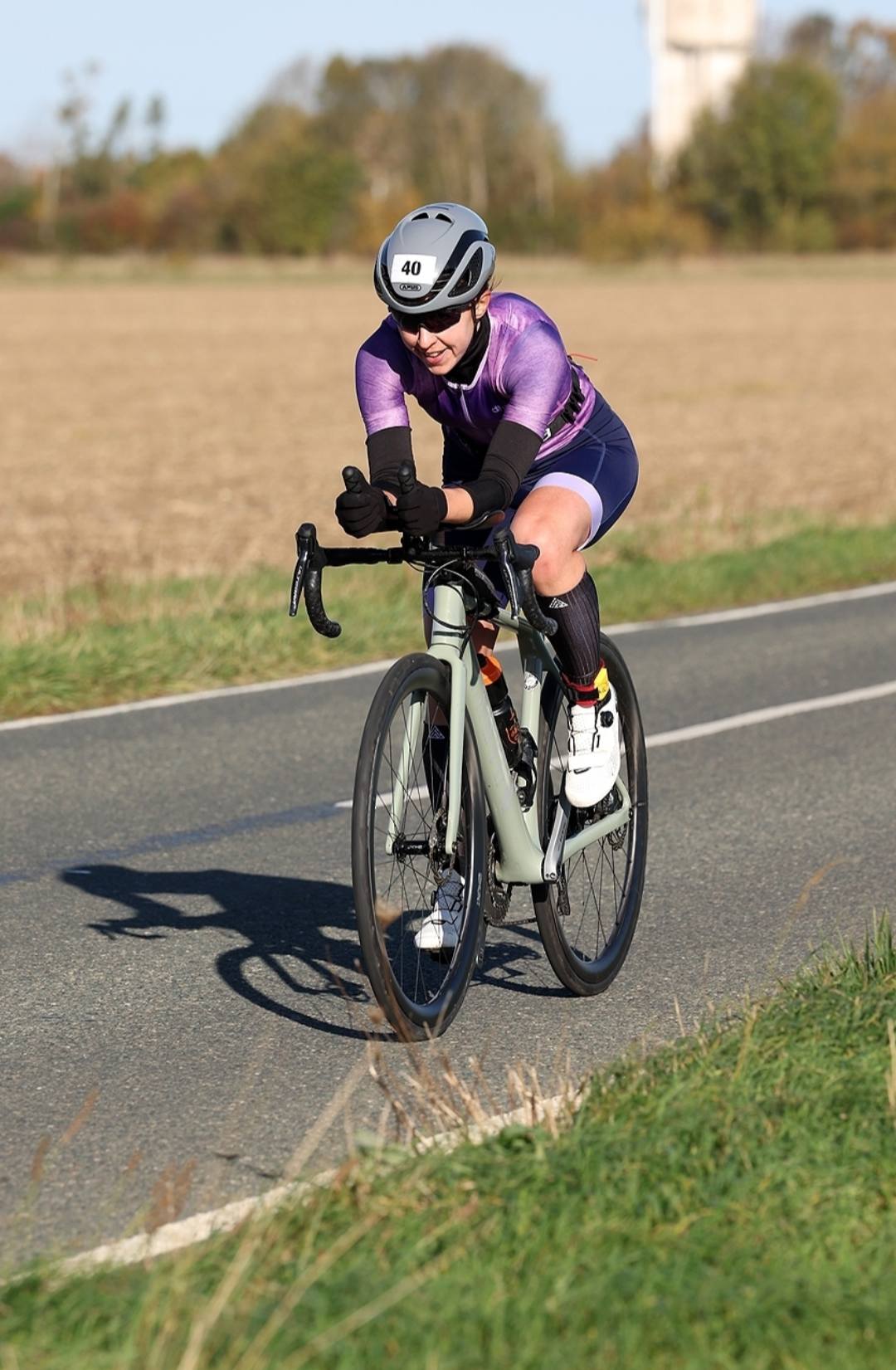
Once I got onto the bike, I started overtaking more women than I expected. And for the first time that day began to wonder whether I might have a chance of doing well.
Then, near the end of the first bike lap, I changed gear going uphill and my chain came off.
Two women I’d already worked hard to overtake rode past me while I stopped to swear and put it back on, and my immediate reaction was to want to chase hard after them and make the time back.
But as I jumped back on the bike, I knew that probably wasn’t the smartest thing to do.
Trying to compensate by riding much harder than planned, especially in the heat, could easily have turned one frustrating problem into a much bigger one.
So I returned to my planned effort and focused on riding as well as possible. Nail the position and power on the bike. Stay as aerodynamic and efficient as possible. Focus. Eventually, I caught and passed both women again.

That moment has stayed with me because I see the same reaction so often with weight loss.
Something doesn’t go to plan and the instinct is to compensate for it.
You eat more than intended over the weekend, so Monday becomes a day of cutting back as much as possible. You miss a few workouts, so suddenly you decide you need to exercise every day. The scales go up, so you assume the answer is to make everything stricter.
Usually, the most useful thing you can do is much less dramatic.
Go back to what was working.
One meal, weekend or difficult week rarely undoes all your progress.
The bigger problem is often what happens when we panic and turn it into a reason to swing to the other extreme.
Sometimes you only need to think about the next step
Apart from the chain coming off, the bike went really well.
And then came the final 5k run.
By that point I was exhausted. It was very hot. And my brain was giving me plenty of convincing reasons why stopping would be a great idea.
A few times, I remember thinking to myself: ‘This is horrible and I am never doing this again!’
Thinking about the whole remaining distance wasn’t helping, so I stopped doing that and made the goal smaller.
Get to the next water station.
Then the next kilometre.
Then the next turn.
I focused on my running form, and when I started getting too caught up in how uncomfortable I felt, I shifted my attention to what was happening around me.
Wonderful people who I am eternally grateful to were reading my name on my tri suit and shouting “Go on Plummer!” as I ran past.
My brother was somewhere around the course taking photos. I was racing for Great Britain at a European Championship – something I’d spent eighteen months working towards and still couldn’t quite believe was happening.
I wanted to experience it, rather than spend the whole final run wishing it was over.
Breaking things down like that sounds very simple, but it can be incredibly useful with any difficult goal.
If you want to lose 3 stone, thinking about the whole 3 stone can feel overwhelming.
When you want to get stronger, thinking about months of training can make the goal seem enormous.
If you’ve struggled with food for years, the idea of completely changing your relationship with it can feel impossible.
But you don’t need to solve all of that today.
Sometimes you just need to work out what the next useful thing is, do that, and then deal with the step after that when you get there.
I had no idea I was in third place
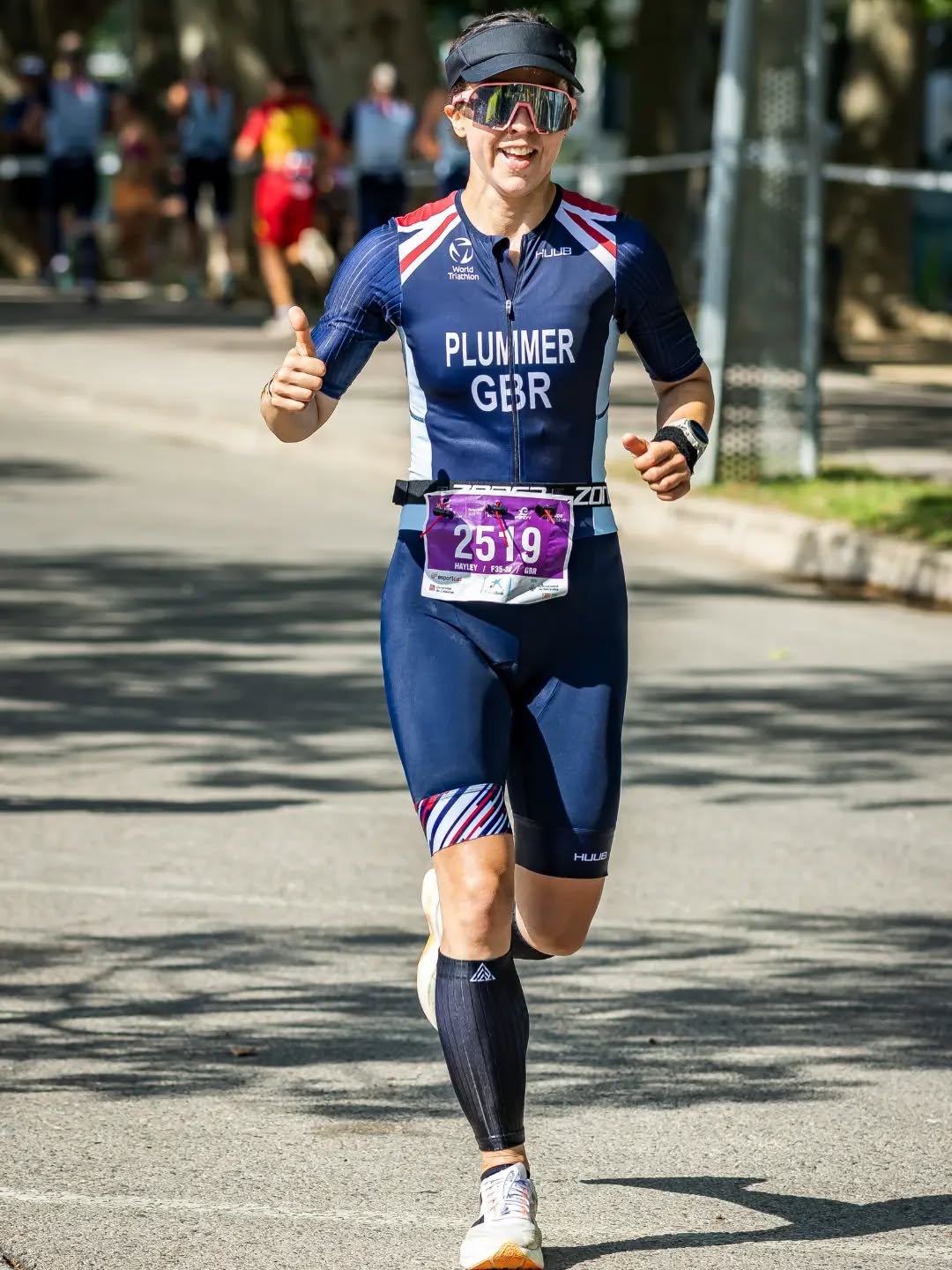
With around 50 metres left, another GB athlete came up alongside me and we somehow ended up sprinting for the finish.
After more than two hours of racing in the heat, sprinting was about the last thing I wanted to do. But as you can probably see from the photo, I wasn’t going to let her go past without trying.
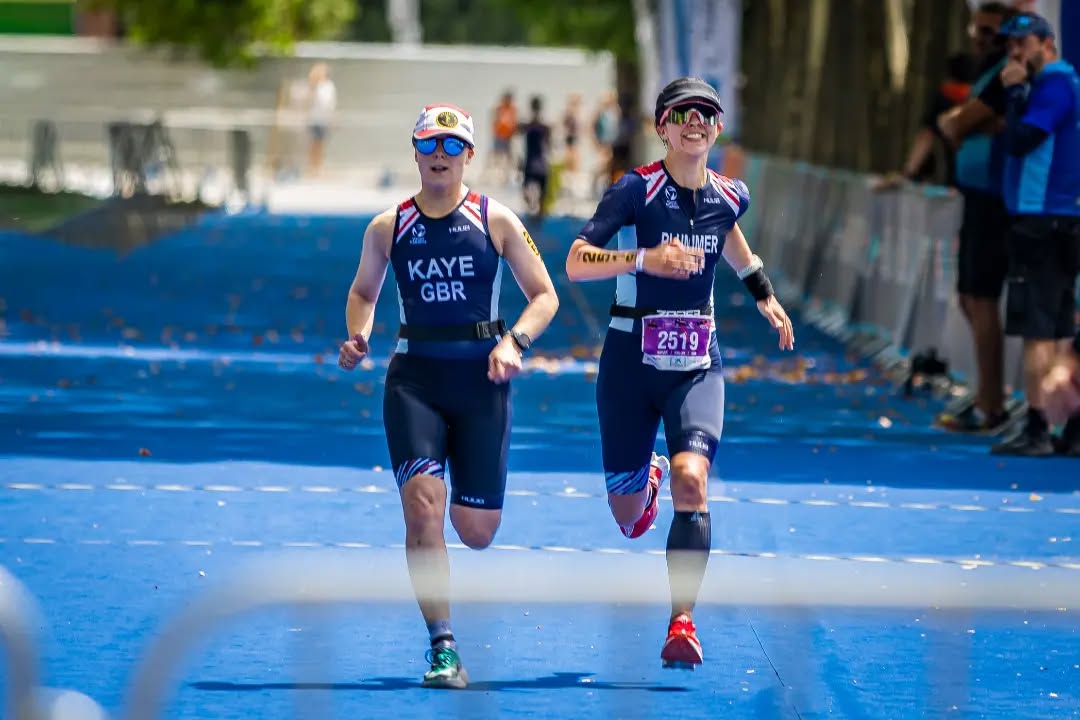
She crossed the line just ahead of me, but because I’d crossed the start line slightly later, I later discovered I’d finished just ahead of her overall.
I had absolutely no idea where I’d placed.
When I checked the live results and saw my name in third, I didn’t believe them. I kept refreshing the page, expecting another result to appear or something to change.
It wasn’t until I was waiting for the medal ceremony that I finally started to believe I might genuinely have won a European Championship bronze medal.
During the hardest part of the race, when I was simply trying to keep myself running to the next water station, I didn’t know I was in a medal position.
I just knew it felt hard.
And I think that’s another useful reminder about progress in general.
Sometimes you’re doing the work and moving forwards, but you can’t see clearly where it’s leading yet.
With weight loss, fitness or behaviour change, there will inevitably be times where progress feels slow, or where you become frustrated by everything that hasn’t happened yet.
That’s often when it helps to zoom out and look at the bigger picture.
What can you do now that you couldn’t do six months ago?
Which situations do you handle differently?
What has become easier?
What habits now feel normal that once took a lot of effort?
Progress isn’t always obvious when you’re right in the middle of it.
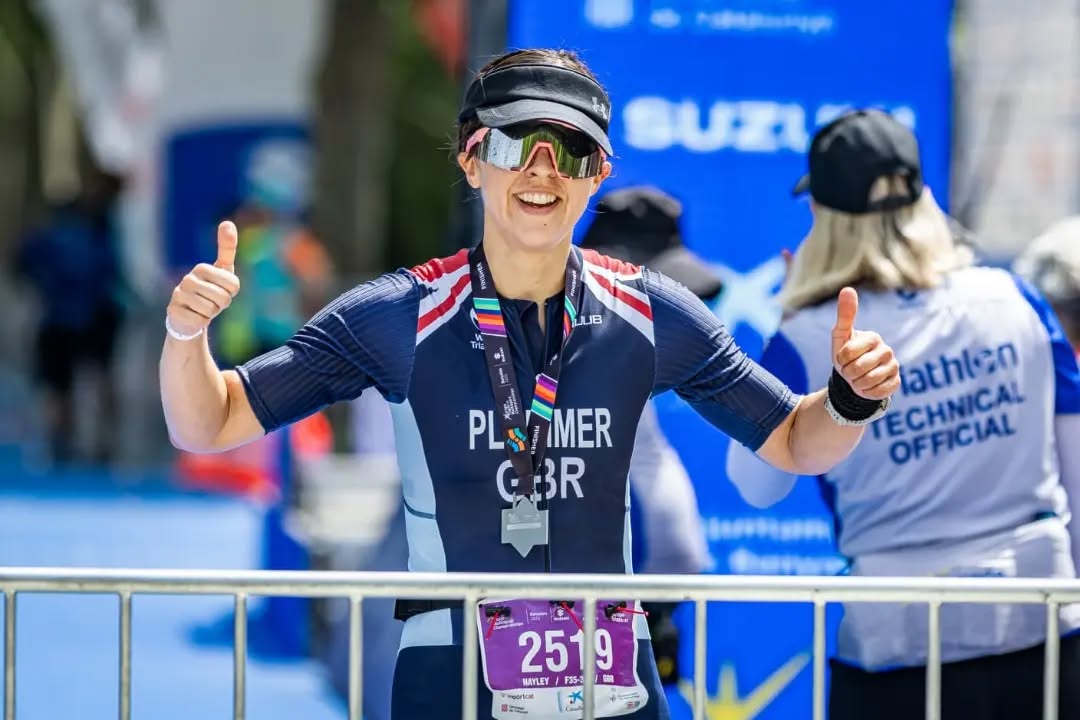
What the medal represented to me
Standing on the podium in Spain was incredibly special, but what made me proud wasn’t only the result on that particular day.
It was knowing how much had gone into giving myself the chance to get there.
There had been hundreds of training sessions, strength work, races, learning, recovery, nutrition, sleep, and heat preparation. And plenty of occasions where I’d simply followed the plan and done something fairly ordinary.
There had also been a period where life became very different and much harder than I’d expected, and I’d continued working towards something positive through that too.
None of those individual things felt particularly significant at the time.
But added together, they took me from wondering whether I might be capable of qualifying for Great Britain to standing on a European Championship podium.
And that’s probably the biggest connection I see with the women I coach.
Most meaningful results are built in fairly ordinary moments.
Eating a proper lunch on a busy day so you don’t arrive home ravenous.
Doing two short workouts in a hectic week and recognising that still counts.
Enjoying a meal out and going back to normal afterwards.
Realising you’re stronger than you were a few months ago.
Getting through a stressful period without abandoning everything you’ve worked on.
None of those moments feels particularly life-changing on its own.
But when enough of them add up, they can take you somewhere very far from where you used to be.
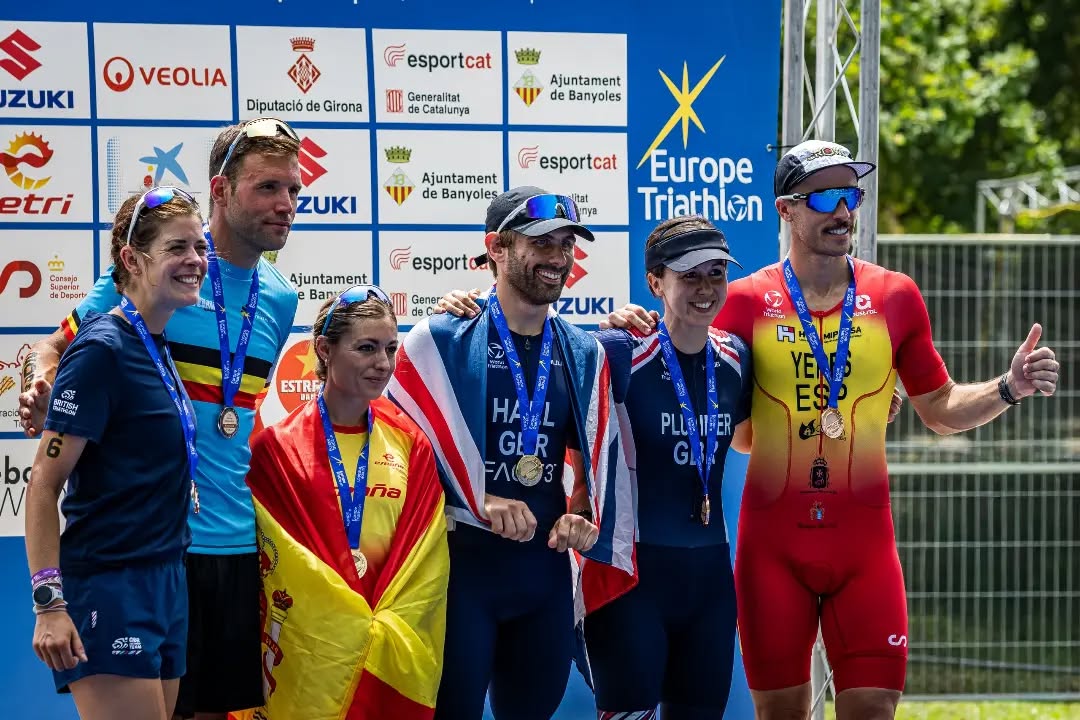
Give yourself the chance to find out
When this started, the ambition was to see whether I could qualify to race for Great Britain.
That alone felt like a big goal.
I couldn’t have predicted where it would eventually lead, and I don’t think the lesson is that anyone can achieve anything if they simply work hard enough.
There are always things outside our control, and as I found out in my personal life, wanting something badly doesn’t guarantee the outcome.
But I do think we often decide something isn’t possible far too early.
If you’ve struggled to lose weight before, that doesn’t mean the next approach has to end the same way.
If you’ve never been particularly active, that doesn’t mean you can’t become stronger and fitter.
And if life has repeatedly knocked your healthy habits off course, maybe the answer isn’t to try harder next time, but to find an approach that works better with real life.
You might need a different strategy, more structure, more time, or someone who can help you work out what’s getting in your way.
Having my own coach reinforced how valuable that support can be.
She couldn’t do the training for me, but she could give me a plan based on where I was and where I wanted to go, help me make better decisions when things didn’t go smoothly, and give me an objective perspective when I needed one.
That’s a big part of what I aim to give the women I coach too.
Your goal probably isn’t a European Championship medal in duathlon. It might be losing weight and keeping it off, getting stronger, having more energy, feeling more confident in your body, or building a healthier relationship with food and exercise.
Whatever it is, you don’t need to know at the beginning exactly where you’ll end up.
Sometimes you just need to give yourself the chance to find out.
If you’d like support with your own goals, you can find out more about my online coaching here:
Online Weight Loss Coaching with Hayley
