
There is so much weight loss advice out there, especially for women over 40.
Eat fewer carbs. Fast for 16 hours. Don’t eat after 7pm. Cut out sugar. Do more cardio. Take this supplement. Avoid that food.
But after coaching hundreds of women to lose weight, get stronger and improve their health, the things I’ve seen make the biggest difference are usually much less complicated.
They’re also rarely about being perfect.
For episode 300 of my podcast, Think Healthy with Hayley, I shared 30 of the biggest lessons I’ve learnt through coaching. There were far too many to fit sensibly into one blog, so I’ve split them into two.
The first 15 points in this blog cover some of the things I come back to most often when helping women lose weight. Namely, nutrition, protein and fibre, exercise, planning, expectations, mindset and finding a way to eat that still allows you to enjoy your life.
You definitely don’t need to tackle all 15.
If one or two give you something useful to work on, that’s a very good place to start. And if you’re interested in listening the the podcast, you can find it here:
1. Get the basics right before worrying about the small stuff
One of the biggest things I’ve learnt from coaching, is how easy it is to spend a lot of energy on things that probably aren’t going to make much difference.
Should you stop eating after 7pm? Is fruit too high in sugar? Is oat milk better than dairy? Should you try intermittent fasting?
Meanwhile, you might be eating very little protein or fibre, barely moving during the day, not doing any strength training and deciding what to have for dinner when you’re already tired and hungry.
If that sounds familiar, you don’t need to optimise everything.
Start with the things that are likely to give you the biggest return:
- include a good source of protein in your meals
- aim for plenty of fruit, vegetables and other high-fibre foods
- walk and move regularly
- do some form of strength training
- make decisions ahead of time where you can, when it comes to food and exercise
None of those are particularly exciting. But after coaching hundreds of women, they’re still the things I see making a difference again and again.
2. Calories matter, but they’re not the whole picture
If your goal is to lose body fat, you need to consume fewer calories than your body uses over time.
But that doesn’t mean successful weight loss is simply about eating as little as possible.
Imagine two people both eating 1700 calories a day.
One gets a lot of those calories from chocolate, pastries, crisps and other foods that are very easy to overeat.
The other includes plenty of protein, fruit, vegetables, wholegrains and other high-fibre foods, alongside some chocolate, crisps or whatever else they enjoy.
Both could theoretically lose weight.
But the second person is likely to find those 1700 calories much more filling and satisfying, while also getting more of the nutrients their body needs.
That’s why I don’t like weight loss advice that stops at “eat fewer calories”.
Calories matter. But what you eat can make staying within those calories much easier.
3. Protein is worth paying attention to
Protein comes up a lot in my coaching, particularly with women in their 40s, 50s and beyond.
It can help you feel fuller after meals and helps you maintain muscle while losing weight. Preserving muscle also becomes increasingly important as we get older.
Ideally, around 1.6g per kg of bodyweight (or target bodyweight if you have a lot of weight to lose) is a good rough number to aim for. To keep it simple, for most women, this works out at aiming for around 90-130g protein over the day. Broken down, that’s 20-45g per meal, with perhaps a high protein snack thrown in there too.
You don’t need to become obsessed with protein or suddenly start living on protein shakes.
But it helps to look at how you could spread it more evenly across your day.
Could you add high protein yogurt, eggs or whey protein at breakfast?
(Check out my article here if you’re unsure on protein powder and what to do with it:
Protein Powder for Women – All You Need to Know)
Could lunch contain a more substantial source of protein?
Could your usual snacks work a little harder for you?
For many women I coach, getting breakfast right in particular can make the rest of the day much easier.
4. Fibre deserves just as much attention
Protein gets a lot of attention. Fibre often gets much less.
But it’s incredibly useful for both weight loss and health.
Fibre can help with fullness, supports digestive and gut health, and can help with reducing cholesterol.
In the UK, the recommendation for fibre for adults is around 30g per day.
Fruit and vegetables contribute, but so do beans, lentils, wholegrains, oats, potatoes, nuts and seeds.
Rather than feeling like you need to completely overhaul your diet, see what additions you could make to what you already eat.
Could you add berries or another piece of fruit to breakfast?
Swap to a higher-fibre bread or wrap?
Add beans or lentils to a meal?
Include an extra portion of vegetables with dinner?
A few small additions across the day can add up to quite a big difference.

5. Planning ahead will make weight loss and life easier
This is one of the least exciting weight loss tips I can give you, but also one of the most useful.
Planning saves decisions.
If you already know what you’re having for breakfast, you’ve got something easy available for lunch and there are a couple of quick dinners in the freezer, you don’t need to make all of those decisions when you’re busy, stressed or hungry.
You also don’t need an elaborate Sunday meal-prep routine.
Planning might simply mean deciding on three dinners before you go shopping.
It might mean buying a few emergency meals for the freezer.
Or keeping ingredients for two-minute lunches in the fridge.
The aim is to make the choice you want to make easier at the point you need to make it.
I’ve seen this make a huge difference for clients who previously felt they needed more willpower.
6. Little things really do add up
An extra 15-minute walk doesn’t feel particularly significant.
Neither does adding 20g more protein to your day, taking the stairs, adding fruit to breakfast or changing one regular snack.
That’s one reason people can dismiss small changes and look for something more dramatic.
But lasting weight loss and better health are rarely the result of one huge decision.
They’re built through lots of small decisions repeated often enough to matter.
I’ve never coached someone who transformed their health because they discovered one magic habit.
On the contrary, it’s usually lots of fairly ordinary things that gradually became their normal.
7. Strength training is essential as we get older
If I could encourage more women over 40 to add one form of exercise to their week, it would be strength training.
As we get older, we naturally lose muscle mass unless we do something to help maintain it.
Strength training helps us preserve and build muscle. It also supports bone health, strength, balance and our ability to stay independent as we age.
And if you’re losing weight, maintaining as much muscle as possible is particularly valuable.
You don’t need to become a bodybuilder and you don’t have to spend hours in the gym.
A couple of well-planned strength sessions each week can be a brilliant place to start.
Try to think beyond what exercise can do for the way your body looks.
What would you like your body to still be capable of in your 60s, 70s and beyond?
That’s a pretty good reason to get stronger now.

8. Walking counts
Walking is one of the most underrated tools for weight loss and health.
It burns calories, can help regulate blood sugar levels, has been shown to improve mood, and is generally easy to recover from. It’s also something you can often fit into everyday life without needing another hour for a workout.
You don’t necessarily need 10,000 steps every day either.
If you’re currently averaging 4000, aiming for 10,000 straight away might be completely unrealistic.
Could you average 5000 or 6000 instead?
Could you take a 10-minute walk at lunchtime?
Walk while you’re on a phone call?
Park slightly further away?
Again, the question doesn’t have to be what’s perfect?
It can simply be: what could I realistically do a little more of?
9. Healthy eating needs to fit around your life
Your approach to weight loss needs to survive birthdays.
Holidays.
Christmas.
Meals out.
Weekends away.
Because even if you manage to avoid all of those while losing weight, they’ll still exist once you’ve lost it.
This is why I help clients learn how to navigate those situations rather than telling them to avoid them.
You might eat more than usual on holiday. That’s OK.
You can enjoy it, come home and get back to the habits you normally follow.
Being able to do that without turning one week away into the next three months is a far more useful long-term skill than being “perfect” for a few weeks.
10. You don’t need to label food as “good” or “bad”
When food is labelled “good” or “bad”, eating the “bad” food can very quickly make you feel bad too.
You ate the chocolate.
In your mind, that means you’ve been bad.
You feel like you’ve blown it, so you might as well carry on.
And something that would have had no impact on your progress whatsoever, leads to days or weeks off track.
It really helps to remove the labels, know that no foods are good or bad, and give yourself permission to eat the things you love.
Some foods provide more protein, fibre, vitamins and minerals.
Some keep you fuller for longer.
Some are easy to overeat.
Some are simply delicious and make life more enjoyable.
Your overall diet can contain all of those things.
Chocolate doesn’t become nutritious because we stop calling it bad. But it also doesn’t ruin an otherwise balanced diet because you ate some.
Context matters.
11. Being kind to yourself doesn’t mean ignoring what went wrong
This is an important distinction.
Self-compassion isn’t telling yourself everything went brilliantly when it didn’t.
If you planned to walk four times and didn’t walk once, it’s useful to acknowledge that.
But compare these two responses:
“I’m useless. I never stick to anything.”
and:
“That didn’t happen this week. What got in the way?”
The second gives you something you can work with.
Maybe you left your walks until the evening and ran out of time.
Maybe four was unrealistic.
Maybe work was horrendous.
Maybe you simply forgot.
Now you’ve got information that can help you make a better plan for next week.
That’s very different from letting yourself off the hook.
12. The way you speak to yourself matters
“I’ve got no willpower.”
“I’m useless.”
“I always fail.”
“I’ll never lose this weight.”
If you repeat those things often enough, it’s very easy to start treating them as facts.
Notice the language you’re using when things don’t go well.
You don’t have to replace every negative thought with something ridiculously positive that you don’t believe.
Aim for something fairer and more useful.
“This week was difficult, but I’ve had difficult weeks before and got back on track.”
“That choice wasn’t what I’d planned. My next one can be.”
One day doesn’t define you.
Neither does one week or one number on the scales.
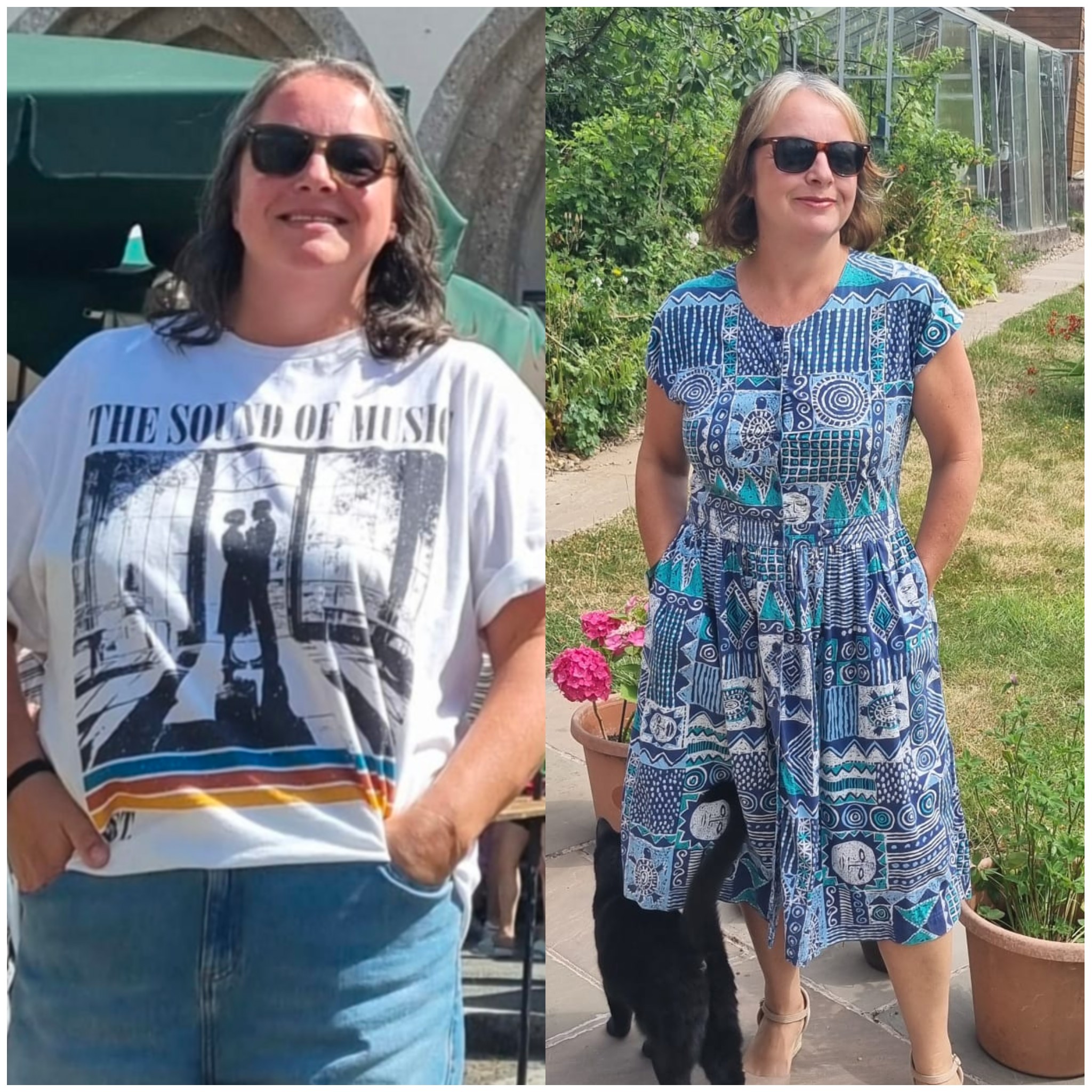
My client Emma is a brilliant example of how much difference mindset shifts can makek.
You can read more about her progress and brilliant results here:
2 Stone Down and Wearing Clothes She Loves: Emma’s Story
13. Weight loss often takes longer than you’d like
I understand wanting to get there quickly.
If you’ve decided you want to lose two or three stone, the idea that it could take many months isn’t particularly appealing.
But unrealistic expectations can make perfectly good progress feel like failure.
Lose a pound and you’re disappointed because you wanted two.
Have a week where your weight stays the same (often because water retention is masking progress) and you decide nothing is working.
A slower rate of weight loss that you can maintain is far more useful than losing weight quickly through an approach you can’t sustain.
I’ve coached women who’ve lost two, three, four stone and more.
Those results came from continuing for long enough for their efforts to add up.
The time is going to pass anyway.
14. Food freedom doesn’t mean eating everything you want all the time
Food freedom is sometimes interpreted as having absolutely no structure around food.
But that doesn’t tend to help people reach their goals.
For my clients, food freedom is often things liike being able to keep chocolate in the house without thinking about it all day.
Going out for dinner without feeling anxious beforehand or guilty afterwards.
Having something because you genuinely want it and stopping when you’ve had enough.
Sometimes more structure can create more freedom.
Eating regular meals can mean you’re not ravenous by 4pm.
Planning something you enjoy into your week can make it less tempting to eat everything now because you’re “starting again Monday”.
Structure makes it easier to do the things that matter and create progress. And making progress gives you the confidence, health and energy to enjoy life more. THAT is freedom to me.
The aim isn’t to stop caring about what you eat.
It’s for food to take up less unnecessary space in your head.
15. If it’s worth it, enjoy it
Cake you love while out with a friend?
Enjoy it.
Amazing ice cream on holiday?
Enjoy it.
The meal out you’ve been looking forward to all week?
Enjoy it.
Where calories can easily creep up is through things you barely enjoyed in the first place.
The biscuits in a meeting because they were there.
Picking at food while cooking.
Finishing something because you started it.
Drinking another glass of wine when you knew it wouldn’t make you feel good.
You don’t have to reject everything that isn’t nutritionally perfect.
Be a little more selective about what’s worth it to you.
And when something is worth it, enjoy it without spending the next day feeling guilty.
What I’ve learnt about successful weight loss
If there’s a theme running through these first 15 lessons, it’s that successful weight loss rarely comes from finding one big thing you’ve been missing.
It’s much more often about getting better at the basics.
Eating enough protein and fibre. Moving more. Getting stronger. Planning ahead. Making choices consciously rather than automatically. Learning from the weeks that don’t go well rather than deciding you’ve failed.
And giving those things enough time to work.
But knowing what to do is only half of the picture.
The next challenge is being able to keep doing it when motivation disappears, work gets busy, your routine changes or life generally gets in the way.
That’s what the second half of these lessons is all about.
[Read part two: 15 Things I’ve Learnt About Losing Weight and Keeping It Off →]
How Online Coaching Can Help
If you’re a woman in your 40s, 50s or beyond and feel like you know what you should be doing but struggle to put it into practice consistently, that’s exactly the kind of thing I help with through my 1:1 online weight loss coaching.
We look at your nutrition, activity, strength training and habits, but also how to make those things work around your actual life.
The aim isn’t another strict plan you follow until you’ve lost weight.
It’s to help you find an approach you can stick with, get results from and eventually feel confident managing for yourself.
If that’s something you’d like support with, you can find more here:
Online Weight Loss Coaching with Hayley
